1966 A&BC Batman Black Bat #51
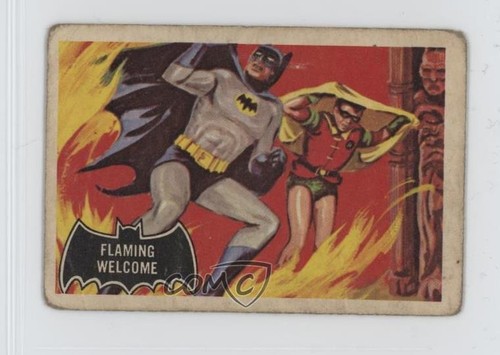
Every grade of this card
| Grade | Live | Asking range | Last confirmed sale | Est. grade (ours) |
|---|---|---|---|---|
| Raw | 5 | $6.52 – $11.18 | $2.68 2026-11-01 | 4.2 |
| MGC ? | 0 | — | — | — |
| TAG ? | 0 | — | — | — |
Confirmed sales — all grades
| Date | Grade | Price | Confidence |
|---|---|---|---|
| 2026-11-01 | Raw | $2.68 | HIGH |
| 2026-10-16 | Raw | $16.00 | HIGH |
Index grading notes

Centering estimate: left border appears notably wider than right (approx 70/30 L/R), top border slightly wider than bottom (approx 55/45 T/B), so horizontal centering is significantly off but not catastrophic. All four corners show visible rounding and wear — no sharp points remain — consistent with VG or lower. The card surface shows clear wear and gloss loss across much of the image area; there appears to be a light crease or fold line visible in the upper-left quadrant of the card face, and the white border edges show toning and handling wear typical of a well-circulated copy. No staining or tears are evident from this single front photo, but the worn corners, gloss loss, and probable crease align this card squarely in the VG (3) range, with VG-EX (4) possible if the crease impression is very faint and GOOD (2) if surface damage is worse than visible.

Centering estimate: left border appears roughly 10-12% wider than right border (approximately 60/40 L/R), top border slightly wider than bottom (approximately 55/45 T/B) — centering is acceptable but not tight. Corners: the lower-left corner shows the most visible rounding/wear; upper corners appear better but still show light wear consistent with handling — no sharp razor corners visible. Edges appear reasonably clean with expected rough-cut texture normal for A&BC production, no major nicks visible at this resolution. Surface shows good color saturation with apparent gloss retention, no obvious creases or staining visible, though the slightly warm/toned appearance of the borders is typical vintage aging for this issue. Back is not visible, limiting confidence; a point estimate of 5 (EX) reflects the light corner rounding and borderline centering, with the range accommodating the possibility of hidden back issues pulling it to VG-EX or surface condition being slightly better than visible.

Centering: left border appears narrower than right (roughly 70/30 left-right disadvantage) and top border is slightly fuller than bottom (approximately 60/40 top-bottom) — centering is off but not severely miscut. Corners show visible rounding at all four tips, most apparent at the lower-left and upper-right, consistent with a VG-EX to EX range. Edges appear rough-cut which is normal for A&BC production and is not penalized. Surface shows some gloss loss and there is noticeable toning/aging to the white borders, with what appears to be minor soiling or handling wear; no obvious hard crease is visible from this view but the watermark obscures the lower center portion, preventing full assessment. The overall presentation supports a VG-EX (4) point estimate, with EX (5) possible if corners are sharper than they appear and no hidden creases exist on the reverse.

Centering estimate: left border appears narrower than right (approximately 70/30 left-right), top and bottom borders look relatively even at roughly 55/45 — centering is off but not severely so. Corners show visible rounding, particularly the top-left and bottom-left corners which appear soft and slightly blunted; the top-right and bottom-right look marginally better but still show wear consistent with a VG-EX range card. Edges appear reasonably clean with some roughness typical of A&BC cuts, no obvious tears or paper loss visible. Surface shows some gloss loss and possible light toning in the white border areas; the watermark obscures the center of the image preventing a confident surface assessment, but no creases are visible in the artwork. Overall condition presents as VG-EX (4), with corner rounding being the primary grade-limiting factor; without corner closeups and with the watermark obstruction, a range of 3–5 is appropriate.